About Us
WICKHAMS BROWN offices and workshop are situated at Faygate, near to Gatwick Airport.
The company was incorporated in 1955.
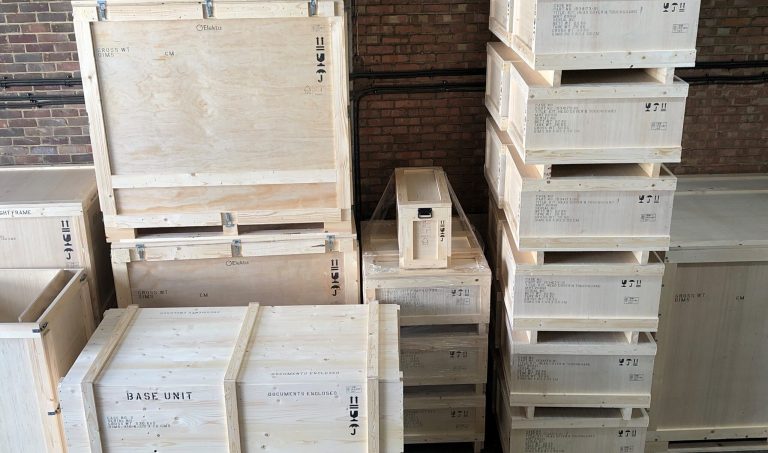
Wickhams Brown has a highly skilled team with remarkable knowledge of designing cases, crates and packaging.
Well equipped workshop, we can manufacture cases in large quantities – also designing and making one-off cases to high specifications.
Wickhams Brown commitment to Modern Sustainability & Re-forestation
At Wickhams Brown, all of our timber is sourced from Sweden and the Baltic countries, regions renowned for their commitment to sustainable forestry and reforestation programmes.
Every piece of timber we use carries recognised shipping and traceability marks, enabling it to be tracked back to the specific forest region and sawmill where it was produced. In addition, all of our packing cases are stamped with our Forestry Commission licence number FC167 and are manufactured in compliance with ISPM 15 international regulations for wood packaging materials.
Sweden has been a global leader in sustainable forestry for over a century. Since 1903, strict forestry legislation has ensured that more trees are planted than harvested, helping to maintain healthy forests for future generations while supporting responsible timber production.
By choosing Wickhams Brown, you can be confident that your export packing cases are produced using responsibly sourced timber from well-managed and sustainable forests.
Swedish forest has to meet a number of different demands. Despite making up less than one percent of the planet’s forested land, it makes Sweden the world’s second-biggest exporter of pulp, paper and sawn wood products. Sweden’s total land area covers 40.8 million hectares, while Swedish forest comprises 22.5 million hectares of productive forest land. Growth is greater than the amount felled, and has been for the entire 20th century onwards. Annual growth stands at around 120 million cubic metres growing stock, solid over bark (m3sk), and each year around 90 million m3sk of that growth is harvested. In other words, the amount of forest in Sweden is constantly growing year on year, with the total volume of wood amounting to over 3 billion m3sk! In less than 100 years, Sweden’s forest assets have doubled..
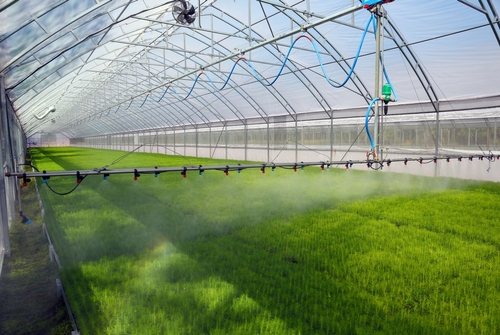
Commercial-scale Swedish spruce seedlings are almost exclusively cultivated in containerized nurseries using genetically improved seed orchard stock to ensure fast growth, optimal hardiness, and climate resilience. Cultivation typically follows a highly mechanized, controlled cycle lasting 1 to 2 years before outplanting.
Saplings are moved outdoors to harden to the elements. Depending on their final destination (northern vs. southern latitudes), they are managed with varying pot/cell sizes and short-day 8-hour treatments to promote root health and sturdy stems.
Commercial-scale Swedish spruce seedlings are almost exclusively cultivated in containerized nurseries using genetically improved seed orchard stock to ensure fast growth, optimal hardiness, and climate resilience. Cultivation typically follows a highly mechanized, controlled cycle lasting 1 to 2 years before outplanting.
Saplings are moved outdoors to harden to the elements. Depending on their final destination (northern vs. southern latitudes), they are managed with varying pot/cell sizes and short-day 8-hour treatments to promote root health and sturdy stems.
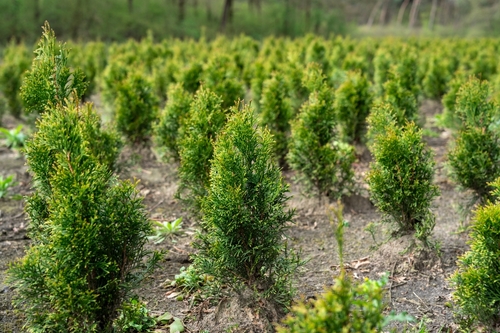
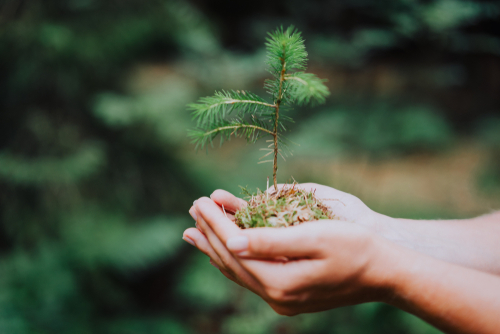
Reforestation is the practice of restoring previously existing forests and woodlands that have been destroyed or damaged. The prior forest destruction might have happened through deforestation, clearcutting or wildfires. Three important purposes of reforestation programs are for harvesting of wood, for climate change mitigation, and for ecosystem and habitat restoration purposes. One method of reforestation is to establish tree plantations, also called plantation forests. They cover about 131 million ha worldwide, which is 3% of the global forest area and 45% of the total area of planted forests.